

Walking into a Japanese hospital or clinic for the first time without confident Japanese can feel intimidating, but the actual process is fairly structured once you know the general steps. Short answer: bring your insurance card (or My Number Card/certificate), be prepared for a reception process that’s more paperwork-heavy than some countries, and know that larger hospitals generally expect a referral letter for non-emergency visits.
Before You Go: Clinic vs. Hospital
| Small Clinic (医院/クリニック) | Large Hospital (総合病院) | |
|---|---|---|
| Best for | General, non-urgent concerns — your first stop for most issues | Specialist care, serious conditions, or emergencies |
| Referral needed? | Generally not required | Often required (紹介状) for non-emergency visits — visiting without one can result in an additional fee |
| Wait times | Generally shorter | Can be significantly longer, especially without an appointment |
💡 The general pattern in Japan is to start at a smaller clinic, which can then refer you to a larger hospital’s specialist department if needed — this isn’t just bureaucracy, it’s how the system is generally designed to route non-emergency care efficiently.
What to Bring
- Your insurance documentation — a My Number Card linked for insurance use (マイナ保険証), or a Certificate of Eligibility for Insurance (資格確認書), since the traditional paper insurance card is no longer issued as of 2026 (see our National Health Insurance guide)
- A referral letter (紹介状), if you’re visiting a larger hospital for a non-emergency concern and have one from a previous clinic visit
- A list of current medications, ideally showing active ingredient (generic) names rather than home-country brand names, since brand names often differ
- Cash or a payment card — many clinics, especially smaller ones, still expect payment at the time of visit, sometimes cash-only
The General Reception Process
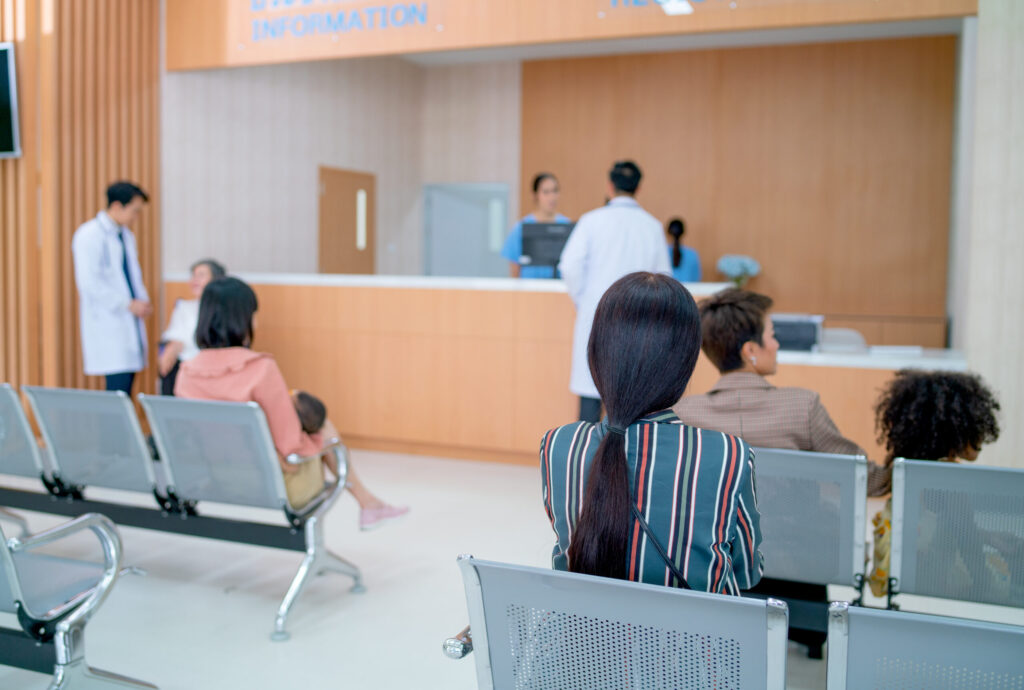
- Check in at the reception desk (受付) and present your insurance documentation
- Fill out an initial questionnaire (問診票) about your symptoms and medical history — some clinics in areas with more foreign residents offer these in English
- Wait to be called (often by name, sometimes by a number) for your consultation
- After seeing the doctor, return to reception for payment and, if prescribed medication, a prescription to take to a separate pharmacy (調剤薬局)
Bridging the Language Gap
| Approach | Notes |
|---|---|
| AMDA International Medical Information Center | A dedicated multilingual medical information and referral service — see our guide on finding English-speaking doctors for details |
| Translation apps | Useful for basic symptom description, though not a substitute for a facility with genuine language support for anything complex |
| Bringing a Japanese-speaking friend | A common and practical approach, particularly for your first few visits before you’re familiar with the process |
| Written symptom notes prepared in advance | Writing out your symptoms and relevant history beforehand (translated if possible) can save time and reduce miscommunication during a rushed appointment |

A Real Hospital Visit Experience
A friend of mine, a longtime U.S. resident here, had to bring her son into a Japanese NICU (neonatal intensive care unit) — about as stressful a hospital visit as it gets. Her account of it was genuinely reassuring: the reception staff were warm, and whenever there was something they needed to ask her, they simply pulled up a translation app rather than struggling through in broken English or expecting her Japanese to carry the conversation. She told me she actually felt more at ease there than she had in hospitals back in her home country.
FAQ
Q: Do I need an appointment, or can I just walk in?
A: This varies significantly by facility — some clinics accept walk-ins during set hours, while others, particularly larger hospitals or specialists, generally require an appointment. Checking in advance saves a wasted trip.
Q: What happens in a genuine emergency?
A: Call 119 for an ambulance rather than trying to find an English-speaking facility first — see our dedicated guide on finding an English-speaking doctor for more on emergency situations specifically.
Q: Will I be charged extra for visiting without a referral letter?
A: At larger hospitals, yes, often — this is a standard additional fee (選定療養費) applied when visiting without a referral for non-emergency care, designed to encourage starting at smaller clinics first.
Your Hospital Visit Checklist
- Confirmed whether a clinic or larger hospital is the appropriate starting point for your concern
- Brought your insurance documentation (My Number Card or certificate)
- Prepared a referral letter if visiting a larger hospital for a non-emergency concern
- Prepared written notes on your symptoms in advance if language is a concern
- Confirmed whether cash payment is expected at the specific facility
Stay Updated with ILSA Hub
Navigating the rental process in Japan can be tricky, but you don’t have to do it alone. Join the official ILSA Hub LINE account for updates, housing tips, and Q&A support based on our verified guide.
- 🔔 Get Notified: Receive updates on new housing guides and essential living tips.
- 💡 Practical Advice: Access bite-sized tips on moving costs, negotiations, and rules.
- 💬 Ask Us Anything: Send us your questions about our articles, and we’ll help guide you using site-based information.
Scan or Click to Join:
👉 Tap Here to Add ILSA Hub on LINE

* Disclaimer: ILSA Hub is an informational platform and does not act as a licensed real estate agency, broker, or guarantor. We do not provide property listing rentals, direct agent services, or guarantees on apartment applications. Our responses on LINE are based solely on general guidelines provided on our website.*