

Written by Keisuke Unno — a graduate of Tokyo University of Foreign Studies (Persian Language).
Married to a non-Japanese partner, and host of the YouTube channel “Tabunka Gurashi 多文化ぐらし,” where he has interviewed dozens of international residents across Japan about their real lives here.
Japan experiences a genuinely high number of earthquakes — commonly cited at around 1,500 felt earthquakes per year across the country — so knowing the basics before you need them matters more here than in many other places. Short answer: get low, protect your head, and stay where you are until the shaking stops, rather than immediately running outside; then follow official guidance for what comes next.
During the Shaking
| Situation | What to Do |
|---|---|
| Indoors | Get under a sturdy table or desk if possible, protect your head and neck, and stay away from windows, mirrors, and tall furniture that could fall |
| In a kitchen | Turn off the stove or nearby heat source if you can do so safely and quickly, but don’t prioritize this over protecting yourself if the shaking is strong |
| Outdoors | Move away from buildings, walls, vending machines, and power lines, which can fall or topple |
| In a train or elevator | Trains generally stop automatically during a strong earthquake; stay seated or hold on. In an elevator, the doors generally open automatically at the nearest floor — avoid using elevators during and immediately after a quake |
⚠️ What Catches Foreign Residents Off Guard: The instinct to run outside immediately is common, but generally not recommended — falling objects near building exteriors and unstable ground near entrances can be more dangerous than staying put in a stable position indoors until the shaking actually stops.
Getting Alerted: The Emergency Earthquake Early Warning System
Japan’s Emergency Earthquake Early Warning (緊急地震速報) system can provide a few seconds to tens of seconds of advance notice before shaking arrives in your area, delivered through phone alerts, TV, and public loudspeakers. This brief warning is generally enough time to take cover if you react immediately rather than hesitating.
A Recommended App: Safety tips
Safety tips, supervised by the Japan Tourism Agency, is a free app available in 15 languages that pushes real-time notifications for earthquake early warnings, tsunami warnings, weather special warnings, and evacuation information, along with reference flowcharts and communication cards for disaster situations. It’s worth installing and setting up before you need it, not during an actual emergency.
After the Shaking Stops
- Check yourself and those around you for injuries
- Check for immediate hazards — gas leaks, damaged wiring, structural damage — before assuming it’s safe to move around normally
- Follow official evacuation guidance if issued for your area, rather than deciding independently based on assumptions
- Be aware that aftershocks are common and can continue for hours or days after a significant quake
Basic Emergency Preparation Worth Doing in Advance
- Know your nearest designated evacuation site (避難所) — this information is generally available from your municipal office or posted around your neighborhood
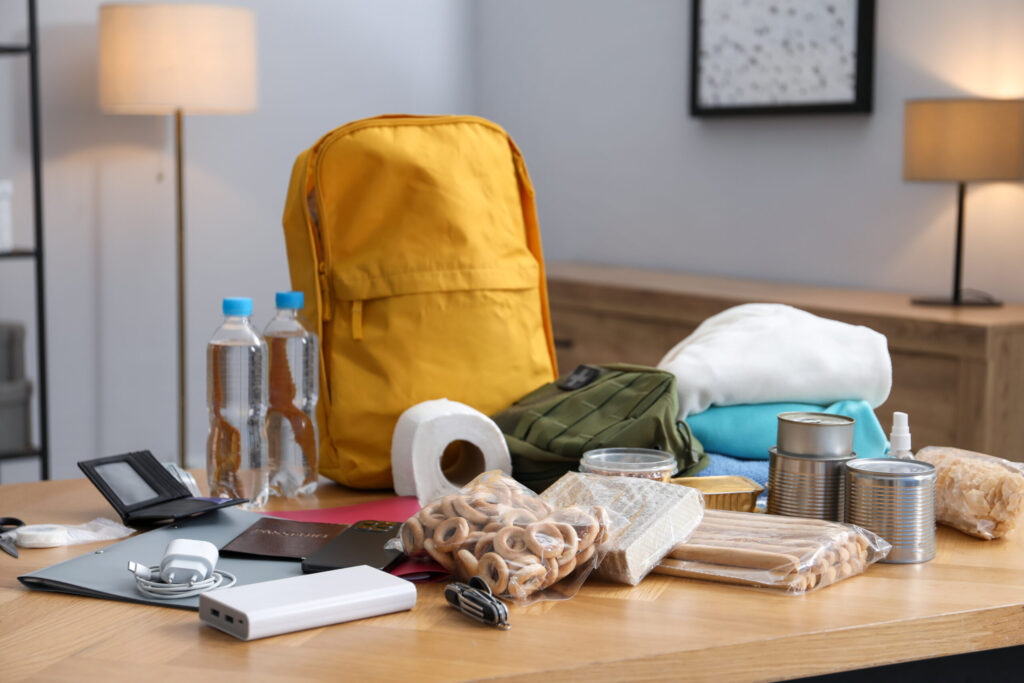
- Keep a basic emergency kit (water, flashlight, basic first aid, phone charger/battery pack) accessible, not buried in storage
- Save Safety tips or a similar alert app before an emergency, not during one
- Know Japan’s emergency numbers: 119 for fire/ambulance, 110 for police (see our dedicated guide on emergency numbers for more detail)
A Real Earthquake Experience
A friend of mine living here on a dependent visa has been through a number of smaller earthquakes, though nothing large-scale yet. What stuck with me was how seriously she takes ongoing preparation: she keeps a three-day grab bag under her bed (supplies, a helmet, a torch) along with steel-toed boots at the foot of the bed in case she needs to leave in a hurry, and a separate box with about two weeks’ worth of disaster supplies in her cupboard. Her approach is a good reminder that preparation isn’t a one-time task you do right after a quake and then forget about.
FAQ
Q: Should I evacuate my building immediately after a strong earthquake?
A: Not necessarily automatically — check for immediate hazards first, and follow official evacuation guidance for your area rather than assuming evacuation is always the correct immediate step regardless of your specific building’s condition.
Q: Is Japan’s building construction actually earthquake-resistant?
A: Japan has extensive seismic building codes and standards, particularly for buildings constructed under more recent regulations — this generally makes structural collapse less common than in areas without such standards, though it’s not a guarantee against all damage in a severe quake.
Q: What should I do if I don’t understand a Japanese emergency broadcast?
A: The Safety tips app provides the same core information in your language, which is exactly why setting it up in advance is worth doing before you’re relying on it during an actual emergency.
Your Earthquake Preparedness Checklist
- Installed the Safety tips app (or a similar multilingual alert service) before an emergency, not during one
- Identified your nearest designated evacuation site
- Assembled a basic emergency kit that’s actually accessible, not buried in storage
- Know the “get low, protect your head, stay put” response rather than the instinct to run outside immediately
- Saved Japan’s emergency numbers (119, 110) in your phone
Stay Updated with ILSA Hub
Navigating the rental process in Japan can be tricky, but you don’t have to do it alone. Join the official ILSA Hub LINE account for updates, housing tips, and Q&A support based on our verified guide.
- 🔔 Get Notified: Receive updates on new housing guides and essential living tips.
- 💡 Practical Advice: Access bite-sized tips on moving costs, negotiations, and rules.
- 💬 Ask Us Anything: Send us your questions about our articles, and we’ll help guide you using site-based information.
Scan or Click to Join:
👉 Tap Here to Add ILSA Hub on LINE

* Disclaimer: ILSA Hub is an informational platform and does not act as a licensed real estate agency, broker, or guarantor. We do not provide property listing rentals, direct agent services, or guarantees on apartment applications. Our responses on LINE are based solely on general guidelines provided on our website.*