Important for 2026 applicants: Japan is in the middle of significant changes to permanent residency — the application fee is set to rise sharply this October, and the screening framework itself is being revised for 2027. Both are covered in detail below.
Permanent Residency (永住者) is generally considered the most stable status of residence available to foreign nationals in Japan — no more renewal deadlines, no restrictions on the type of work you can do. Short answer: most applicants need 10 years of continuous residence in Japan, with at least 5 of those years under a work or residence-based status (student years generally don’t count toward that 5-year portion), though several exceptions can shorten this significantly. Screening goes well beyond simply counting years, and — importantly — even a consultation suggesting your case looks fine beforehand doesn’t guarantee approval.
General Eligibility Requirements
| Category | General Residence Requirement |
|---|---|
| Standard cases | 10 years of continuous residence in Japan, including at least 5 years under a work or residence-based status. Time spent under certain categories, such as Technical Intern Training or Specified Skilled Worker (i), may not count toward this 5-year portion — confirm your specific case with a specialist |
| Spouse of a Japanese national | Generally 3 years of marriage plus 1 year of actual residence in Japan |
| Highly Skilled Professional (points-based system) | Generally 3 years if you have maintained 70+ points under the applicable rules, or 1 year at 80+ points |
| Long-Term Resident (定住者) | Generally 5 years of continuous residence in Japan |
⚠️ Keep in Mind: Meeting the minimum residence requirement is necessary but not sufficient on its own. Screening also considers your income stability, your history of tax and social insurance payments (including whether they were paid on time, not just whether they’re currently up to date), your compliance with immigration notification requirements, time spent outside Japan, and other factors like traffic violations. This is a holistic review, not a simple year-counting exercise. A revised guideline from the Immigration Services Agency, with broader implementation planned from April 1, 2027, is expected to bring even closer attention to income and public-obligation compliance — check the latest official guidance as this rolls out.
The General Application Process
- Confirm your eligibility against the residence requirement for your specific category
- Gather required documents — these vary depending on your current status (spouse, work visa, highly skilled professional, etc.), and generally include income and tax documents, your reason for wanting permanent residency, and proof of your current residence status
- Submit your application at the regional immigration office covering your address — as of 2026, permanent residency applications cannot be submitted online, unlike some other status procedures, so this generally means an in-person visit or working through an authorized representative such as a Gyoseishoshi
- Wait for a decision — officially stated processing times are generally 4 to 6 months, but this is frequently exceeded in practice (see below)
- Receive your new Residence Card reflecting Permanent Resident status once approved
How Long Does It Actually Take?
The Immigration Services Agency’s standard processing period is generally 4 to 6 months. In practice, actual processing times can be substantially longer, depending on the immigration office and the individual case. Recent published statistics have shown the national average reaching roughly 10 months in some reporting periods, and applicants in high-application-volume areas have reported waits considerably longer than the official standard. Given this, it’s generally wise to plan around a longer, more conservative timeline rather than the officially published minimum — especially if the timing of your application matters for other life plans.
A Real Permanent Residency Experience
A friend of mine, a Canadian citizen who’s lived in Japan for 27 years, had a genuinely instructive experience with her first permanent residency application. Before applying, she went through a consultation that suggested her situation looked fine — but the application was ultimately rejected anyway. Her experience is a useful reminder that a positive-sounding informal consultation isn’t the same as an actual approval, and that the comprehensive review immigration authorities conduct can surface factors that aren’t always obvious in advance, even after decades of living in Japan.
An Upcoming Change: Revocation for Serious Non-Compliance
Under a 2024 immigration law amendment, new grounds for revoking permanent resident status are scheduled to take effect on April 1, 2027, covering specific serious circumstances such as deliberately failing to pay taxes or social insurance premiums, or certain serious criminal convictions. The Immigration Services Agency is also developing more detailed guidelines for how these rules will actually be applied, with a public comment period on the revocation guidelines beginning in August 2026. Because the detailed operation is still being finalized, permanent residents should continue to comply carefully with tax, social insurance, and other legal obligations, and check the latest official guidance as this develops, rather than assuming a specific outcome if revocation were ever to apply.

Fees Are Changing on October 1, 2026
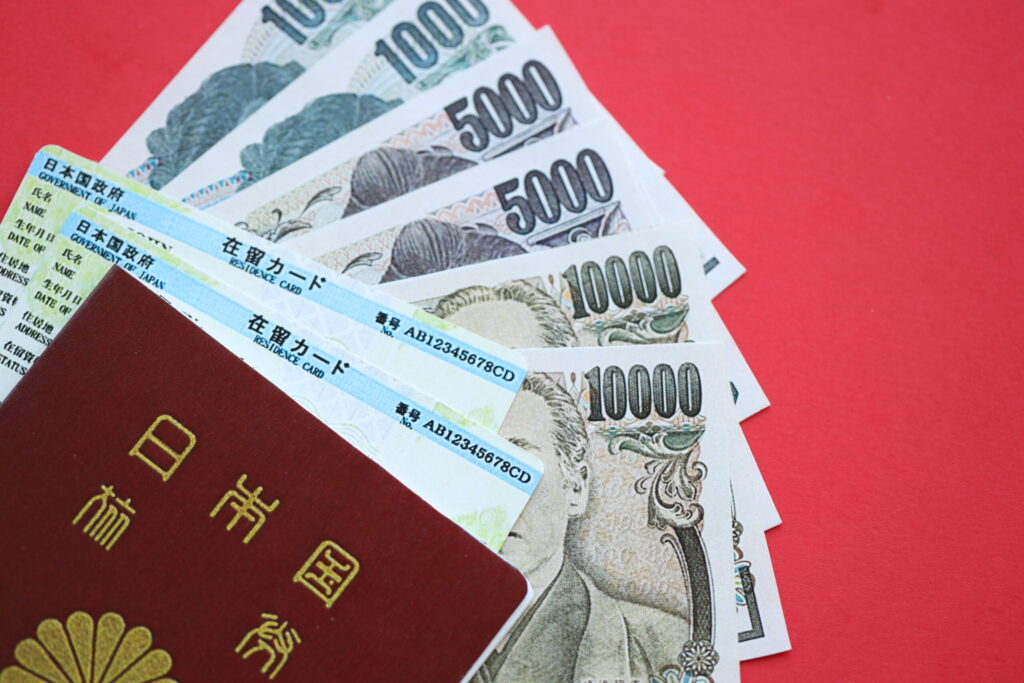
As of September 2026, the current fee for an approved permanent residency application is ¥10,000. The Immigration Services Agency has officially confirmed that from October 1, 2026, this fee will rise to ¥200,000, as part of a broader revision to immigration procedure fees.
If you submit your application by September 30, 2026, the current ¥10,000 fee will apply even if your application is ultimately approved on or after October 1 — the fee is generally determined by your application date, not your approval date. Applications submitted on or after October 1 will be subject to the new fee.
A reduction program has also been confirmed for applicants facing genuine financial hardship who meet specific criteria (broadly, those in circumstances comparable to those requiring public assistance, along with certain humanitarian cases) — under this program, the permanent residency fee is reduced to ¥20,000 rather than the full ¥200,000. This reduction generally isn’t available through the online application system; it requires an in-person application with supporting documentation.
⚠️ Important: Immigration fees are changing on October 1, 2026. If your timing is flexible, submitting before September 30 preserves the current, lower fee. Check the latest information from the Immigration Services Agency directly before applying, especially if you’re applying close to the changeover date.
FAQ
Q: Can I apply for permanent residency online?
A: No — as of 2026, permanent residency applications are specifically excluded from Japan’s online immigration application system, unlike renewal applications for many other status categories.
Q: Does an immigration consultation guarantee my application will be approved?
A: No. As illustrated by the experience above, even a consultation that suggests your situation looks favorable doesn’t guarantee the outcome of the actual comprehensive review.
Q: Do my years as a student count toward the residence requirement?
A: Generally, student years don’t count toward the 5-year work/residence-based portion of the standard 10-year requirement, though the overall years in Japan may still matter for other aspects of your case — confirm your specific situation with a specialist.
Q: What happens to my permanent residency if I have a serious legal or compliance problem later?
A: Starting April 2027, a new revocation system applies in specific serious circumstances. This underscores that permanent residency doesn’t eliminate the importance of continued tax, insurance, and legal compliance.
Your Permanent Residency Checklist
- Confirmed which residence-requirement category applies to your specific situation
- Reviewed your tax, pension, and health insurance payment history for consistency and timeliness, not just current standing
- Gathered the specific documents required for your category well in advance
- Planned around the realistic, longer processing timeline rather than the official minimum
- Didn’t treat a favorable informal consultation as equivalent to approval
- Confirmed the current application fee directly with the Immigration Services Agency before applying
- Consulted a qualified immigration specialist for guidance specific to your situation
Stay Updated with ILSA Hub
Life in Japan comes with a lot of small questions — and the official ILSA Hub LINE account is where we help, especially with housing and everyday life.
- 🏠 Our Main Focus: Most of what we share is about housing and daily life in Japan — apartment hunting, contracts, and practical living tips.
- 💬 Ask Us Anything: Send us your questions about our articles, and we’ll help guide you using site-based information.
- ⏰ Never Miss a Deadline: Set an automated reminder right on LINE — just type “set reminder,” tell it what and when, and our system will notify you automatically as the date approaches (like 30 and 7 days before). Handy for things like visa renewals (up to 90 days’ notice) or lease renewal deadlines. Your dates are kept private and never shared outside ILSA Hub.
Scan or Click to Join:
👉 Tap Here to Add ILSA Hub on LINE

Disclaimer: ILSA Hub is an informational platform. We do not act as a licensed real estate agency, financial institution, medical provider, recruitment agency, or emergency service, and do not provide immigration, visa, or legal services. We are not a substitute for advice from a qualified administrative scrivener (行政書士) or attorney. We do not provide legal, medical, financial, or professional advice specific to your situation. Our responses on LINE are based solely on general guidelines provided on our website. For emergencies, always follow official government guidance.